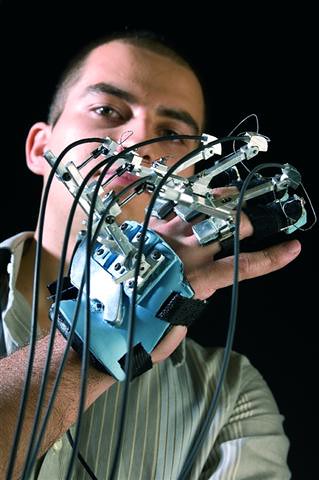
AI for robots is at the forefront of technological innovation. Lute has successfully raised $20 million to develop advanced touch-based AI that will revolutionize how robots interact with their environment.
What is touch-based AI?
Touch-based AI is an innovative approach that empowers robots to interact with their environment through tactile feedback. Unlike traditional AI systems that rely heavily on visual or auditory inputs, touch-based AI allows robots to perceive and respond to physical sensations, enabling them to perform tasks more intuitively.
This technology leverages advanced sensors and machine learning algorithms to interpret data from physical interactions. By using artificial intelligence for robots, these systems can learn from their experiences, adapting to various surfaces and objects to enhance their operational efficiency.
The applications of touch-based AI are vast and varied. Industries such as manufacturing, healthcare, and service sectors are beginning to harness this technology to improve automation and streamline processes. For instance, in manufacturing, robots equipped with touch-based AI can handle fragile components without damaging them, while in healthcare, they can assist in patient care by providing gentle, responsive interactions.
As Lute raises $20 million to further develop this cutting-edge technology, the potential impact of touch-based AI on the robotics landscape is becoming increasingly evident. With advancements in this field, the future of robot-human collaboration looks promising.
The impact of AI on robotics
The integration of AI for robots is transforming the landscape of automation and robotics. As businesses seek to enhance efficiency and productivity, the role of advanced artificial intelligence technologies has become increasingly vital. This shift is not only about improving functionality but also about enabling robots to interact more intuitively with their environments.
The impact of AI on robotics can be categorized into several key areas:
- Enhanced Perception: AI algorithms allow robots to better understand and interpret sensory information, leading to improved decision-making capabilities.
- Adaptive Learning: Through machine learning, robots can adapt their behavior based on past experiences, making them more effective in dynamic environments.
- Human-Robot Interaction: The development of touch-based AI enables robots to engage with humans more naturally, fostering collaboration in various settings.
- Cost Efficiency: By automating repetitive tasks, AI for robots can significantly reduce labor costs and minimize human error.
As Lute’s recent $20 million investment demonstrates, the future of robotics lies in the continuous advancement of AI technologies, promising a new era of smarter, more capable machines.
Lute’s funding journey
Lute’s journey in securing funding has been pivotal in advancing its mission to integrate AI for robots. The company, founded just a few years ago, has consistently attracted investors drawn to its innovative approach to touch-based artificial intelligence.
In its latest funding round, Lute successfully raised $20 million, a significant milestone that underscores the growing confidence in its technology and potential market impact. This investment will enable Lute to enhance its research and development efforts, focusing on creating more sophisticated touch-based AI systems that can dramatically improve robotic interactions.
The funding journey has not been without challenges. Lute faced skepticism in early discussions, as many potential investors were uncertain about the practicality of touch-based AI in real-world applications. However, the company’s persistence and a series of successful prototypes convinced various venture capitalists of the technology’s viability.
Key factors contributing to Lute’s successful funding include:
- A strong founding team with a proven track record in robotics and AI.
- Innovative technology that addresses critical gaps in current robotic capabilities.
- Strategic partnerships with leading tech firms and research institutions.
With this funding, Lute is poised to make significant strides in the robotics industry, positioning itself as a leader in the integration of AI for robots.
How touch technology enhances robots
Touch technology plays a crucial role in enhancing robots, allowing them to interact with their environment in more sophisticated ways. By integrating AI for robots, developers can create systems that not only respond to visual and auditory stimuli but also recognize and react to tactile feedback.
Key advancements in touch technology include:
- Pressure Sensors: These components enable robots to gauge the amount of pressure applied during interactions, improving their ability to handle delicate objects.
- Capacitive Touchscreens: By using screens that respond to human touch, robots can provide a user-friendly interface, making them more accessible to non-experts.
- Haptic Feedback: This technology allows robots to simulate the sensation of touch, offering users a more immersive experience when interacting with the robot.
- Soft Robotics: Innovations in soft robotics are enhancing the safety and adaptability of robots, allowing them to work alongside humans without the risk of injury.
As Lute’s investment strategy unfolds, the integration of touch technology with AI for robots promises to redefine how these machines operate and interact with the world.
Future trends in AI for robots
The future trends in AI for robots suggest a significant evolution in how these machines will interact with their environments. As technology advances, the integration of sophisticated AI systems will allow robots to perform tasks with greater precision and adaptability.
Experts predict the following key trends:
- Enhanced Sensory Capabilities: Future robots will incorporate more advanced sensory technology, enabling them to perceive and respond to their surroundings in real-time.
- Improved Learning Algorithms: The development of machine learning algorithms will facilitate robots’ ability to learn from experience, making them more efficient in performing complex tasks.
- Increased Collaboration: Robots equipped with AI will work alongside humans in various sectors, enhancing productivity and safety in workplaces.
- Greater Autonomy: Future robots will be able to operate independently, making decisions based on their AI capabilities, which will lead to more efficient processes in industries such as manufacturing and logistics.
As Lute’s investment demonstrates, the focus on touch-based AI for robots marks a pivotal point in this technological evolution, paving the way for innovative applications and enhanced human-robot interactions.
Challenges facing AI development
The development of AI for robots faces several significant challenges that could hinder progress in this innovative field. These challenges stem from both technical and ethical concerns that need to be addressed to ensure the successful integration of AI technologies in robotic systems.
- Technical Limitations: One of the primary challenges is the current limitations in machine learning algorithms. While AI has made remarkable strides, creating models that can learn and adapt in real-time remains a complex problem.
- Data Quality: The effectiveness of AI for robots heavily relies on the quality of the data used for training. Inaccurate or biased data can lead to poor decision-making capabilities, which could compromise the safety and reliability of robotic systems.
- Ethical Considerations: The deployment of AI in robotics also raises ethical questions. Concerns about privacy, accountability, and the potential for job displacement require thoughtful consideration and regulation.
- Integration Challenges: Integrating AI technologies into existing robotic frameworks often presents compatibility issues that need to be resolved to achieve seamless functionality.
Addressing these challenges is crucial for the advancement of AI for robots, ensuring that these technologies can be safely and effectively utilized across various industries.
By University of Salford via Openverse
Sources
You might also like
US Chip Restrictions: A Clear Blow to China’s AI Development · Understanding Online Access to Medically Supervised Testosterone Injections · Satellite Photos of Your Location: Easy Access to Recent Images