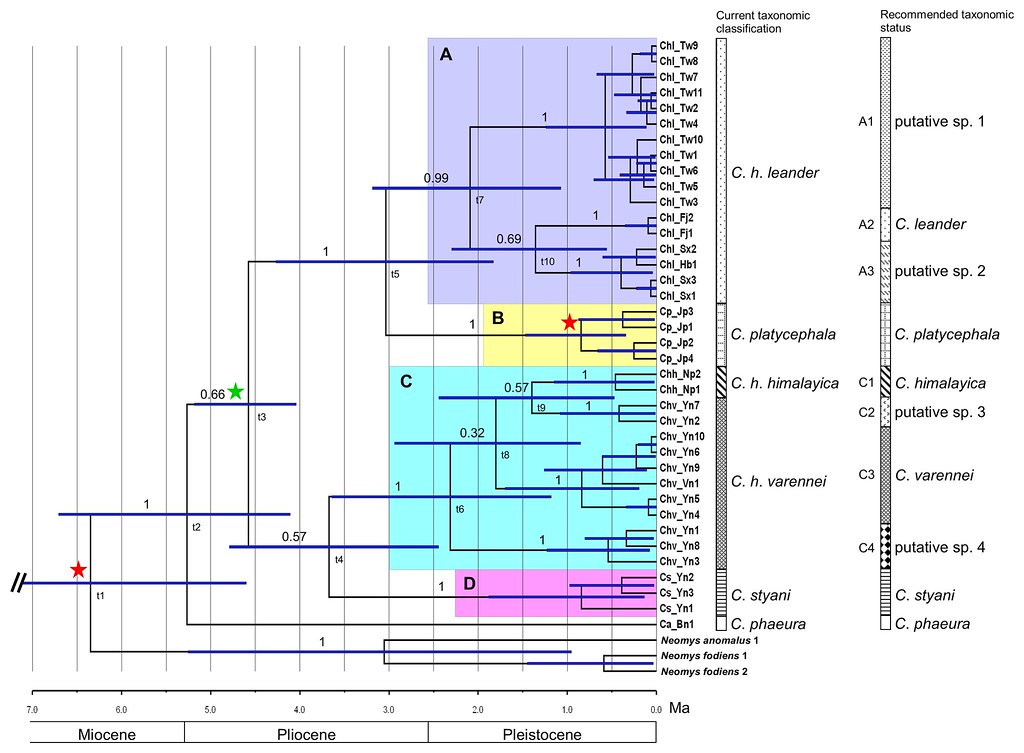
molecular clock age calibrations are essential for estimating the divergence of animal lineages. Recent studies challenge previous assumptions, suggesting older divergence times than previously thought.
Understanding Molecular Clock Theory
The molecular clock theory is a fundamental concept in evolutionary biology that estimates the timing of evolutionary events based on genetic mutations. By analyzing the rate at which mutations accumulate in DNA sequences, scientists can infer the age of different species and their common ancestors. This approach hinges on the assumption that genetic changes occur at a relatively constant rate over time.
However, the accuracy of these age estimates can be influenced by various factors, including:
- Calibration points: The choice of calibration points, or fossil records, can significantly impact the estimated divergence times.
- Mutation rates: Variability in mutation rates across different lineages can lead to discrepancies in age estimations.
- Model selection: The models used to analyze molecular data can also affect the derived age estimates.
Recent studies have highlighted the need for a critical re-evaluation of molecular clock age calibrations. For instance, researchers have suggested that incorporating more diverse calibration points may yield more accurate pre-Ediacaran divergence estimates for animals. As the field evolves, ongoing research will be essential to refine these methodologies and improve our understanding of the evolutionary timeline.
Revisiting Divergence Estimates
Recent studies have brought new insights into the field of molecular clock age calibrations, particularly regarding divergence estimates of early animal lineages. These findings suggest that previous assumptions about the timing of major evolutionary events may need reevaluation.
One key aspect under scrutiny is the maximum age calibrations used in molecular clock analyses. Many researchers argue that these calibrations can significantly influence the estimated divergence times among species. As a result, differing methodologies may yield vastly different conclusions about when crucial divergences occurred.
Several studies have attempted to address these discrepancies by applying new techniques and incorporating additional fossil evidence. This has led to the emergence of revised divergence estimates, specifically within the context of pre-Ediacaran animals. The new molecular clock age calibrations suggest that some groups may have diverged much earlier than previously thought, prompting a re-examination of the evolutionary history of multicellular life.
As scientists continue to refine their approaches, the importance of robust calibrations becomes increasingly clear. Understanding these divergences not only impacts our knowledge of animal evolution but also helps illuminate the broader ecological contexts in which these organisms thrived.
Implications for Evolutionary Biology
The implications of molecular clock age calibrations are profound for our understanding of evolutionary biology. By revisiting these calibrations, researchers can gain insights into the timing and patterns of divergence among species, which is essential for constructing accurate phylogenies. A more precise estimation of divergence times allows scientists to better understand the evolutionary history of life on Earth.
One significant aspect of this reevaluation is its impact on our knowledge of early animal evolution. Understanding when major groups first appeared can reshape our comprehension of ecological interactions and evolutionary pressures in ancient environments. For instance, the revival of pre-Ediacaran divergence estimates for animals suggests that complex life may have emerged much earlier than previously thought.
The ongoing debate surrounding molecular clock age calibrations highlights the importance of integrating various data sources, including fossil records and genetic data. By harmonizing these different approaches, researchers can achieve a more nuanced view of evolutionary timelines.
Additionally, the outcomes of these studies carry implications for conservation biology. Accurate evolutionary timelines can inform efforts to protect endangered species by shedding light on their historical adaptability and resilience.
In summary, the reassessment of molecular clock age calibrations offers a pathway to deeper insights in evolutionary biology, potentially altering our understanding of life’s history on Earth.
Recent Research Findings
Recent research has brought significant insights into the field of molecular clock age calibrations, particularly regarding the divergence estimates for early animal life. A study published in a leading scientific journal has re-evaluated the maximum age calibrations of molecular clocks, suggesting that these methods could indeed push back the timeline for when certain animal lineages diverged.
One of the key findings from this research indicates that the divergence of various animal groups may have occurred during the pre-Ediacaran period, a time previously thought to be too early for such events. The study challenges long-standing assumptions about the timing of evolutionary events and highlights the importance of accurate molecular clock age calibrations in understanding the history of life on Earth.
Researchers used a combination of genomic data and refined calibration techniques to reassess previous estimates. The implications of these findings are profound, as they not only shed light on the origins of multicellular life but also emphasize the need for continued refinement of molecular clock methodologies.
- Key insights include:
- The possibility of earlier divergences than previously accepted.
- The impact of improved age calibrations on evolutionary studies.
- The necessity for ongoing research in molecular clock theory.
By plosone-phylo via Openverse