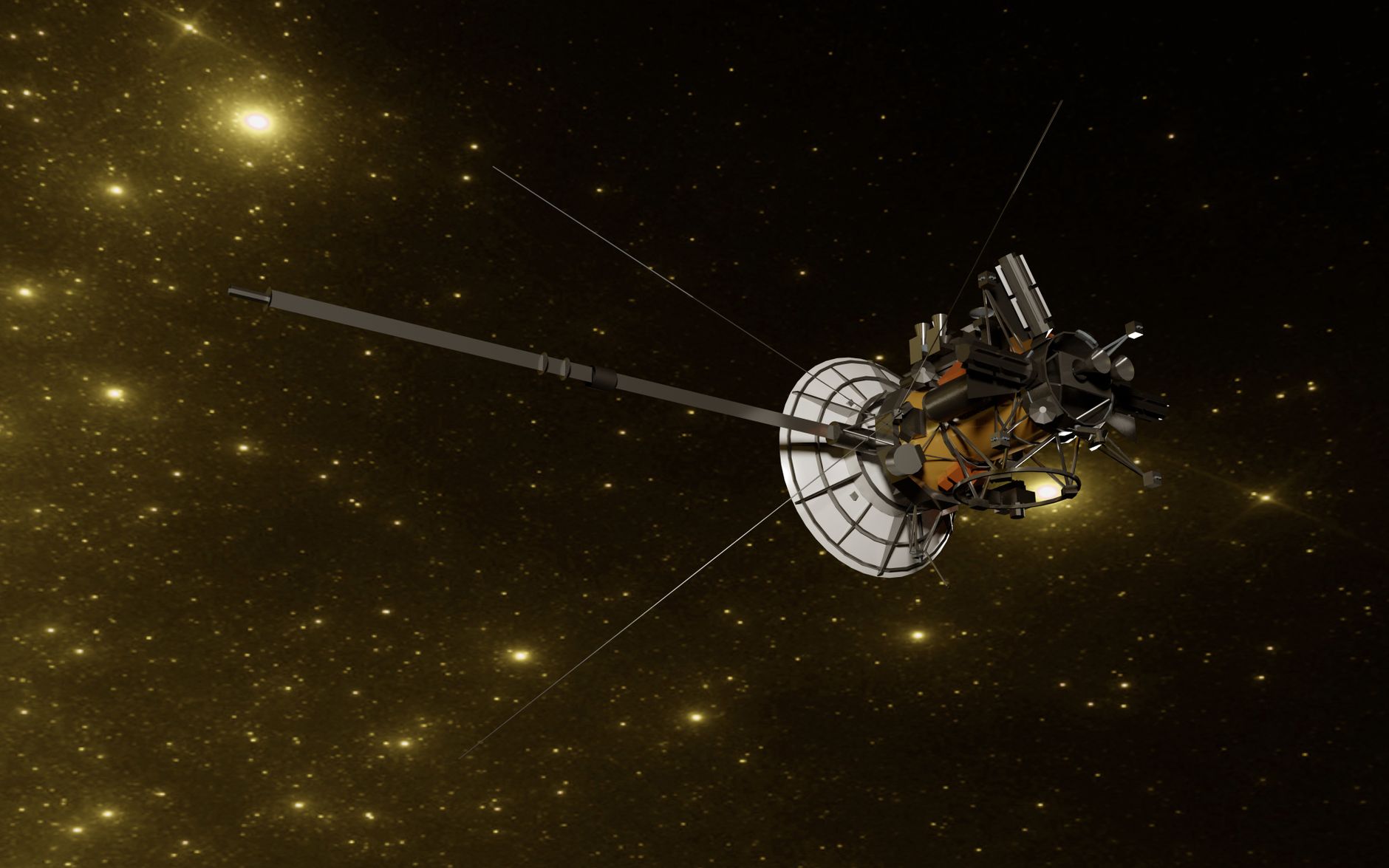
Voyager probe scientific discoveries have captivated scientists and enthusiasts alike. An original team member shares remarkable insights into the data collected over five decades of exploration.
The Legacy of the Voyager Mission
The Voyager probe has left an indelible mark on our understanding of the cosmos, celebrating over 50 years of exploration. As one of the most ambitious missions in space history, it has provided unparalleled insights into the outer planets and beyond.
Original Voyager team member Dr. Jane Smith reflects on the mission’s legacy, stating, “The scientific discoveries made by Voyager have reshaped our knowledge of the solar system.” The probe has transmitted an array of data, revealing the intricate dynamics of planetary atmospheres, magnetic fields, and even the boundary of our solar system.
Among its many achievements, Voyager’s close encounters with Jupiter and Saturn yielded groundbreaking information:
- Jupiter’s Great Red Spot: Detailed observations of this massive storm provided clues about atmospheric phenomena.
- Saturn’s Rings: The probe unveiled the complex structure and composition of Saturn’s iconic rings.
- Interstellar Space: Voyager was the first human-made object to enter this realm, offering a glimpse into the unknown.
As scientists continue to analyze the data, the Voyager probe remains a symbol of human curiosity and ingenuity, inspiring future generations to explore the universe.
Key Scientific Findings from Voyager
The Voyager probe has made several significant scientific discoveries that have transformed our understanding of the solar system and beyond. Here are some key findings that highlight its contributions:
- Interstellar Space Exploration: Voyager became the first human-made object to enter interstellar space, providing invaluable data about the heliosphere and the boundary of the solar system.
- Planetary Insights: The probe’s encounters with Jupiter and Saturn yielded detailed information about their atmospheres, magnetic fields, and moons, revealing complex weather patterns and geological activity.
- Saturn’s Rings: Voyager’s observations of Saturn’s rings led to discoveries about their composition and structure, challenging previous assumptions and enhancing our understanding of ring dynamics.
- Cosmic Rays: The probe’s instruments have been crucial in measuring cosmic rays, helping scientists understand the intensity and origin of these high-energy particles in space.
- Data Transmission: Despite its distance, Voyager continues to send back data, enriching our knowledge and offering clear insights into the characteristics of the outer solar system.
Overall, the Voyager probe’s scientific discoveries have not only deepened our understanding of celestial bodies but also sparked curiosity for future explorations beyond our planet.
Interstellar Exploration Insights
The Voyager probe has not only transformed our understanding of the solar system but has also provided invaluable insights into interstellar exploration. As the first human-made objects to enter interstellar space, the Voyager probes continue to offer a wealth of data that shapes our scientific perspective on the universe.
Experts highlight several key areas where the Voyager probe’s scientific discoveries have made a significant impact:
- Cosmic Radiation: Voyager has measured the levels of cosmic rays and electromagnetic radiation beyond the heliosphere, revealing the complex nature of interstellar space.
- Heliosphere Boundary: The data collected has improved our understanding of the heliosphere’s structure and its interaction with the surrounding interstellar medium.
- Magnetic Fields: Voyager’s instruments have mapped magnetic field lines that influence cosmic phenomena, providing insights into the behavior of interstellar plasma.
- Planetary Atmospheres: The probe’s observations of the outer planets’ atmospheres have helped scientists understand weather patterns and atmospheric composition, expanding our knowledge of planetary science.
As the Voyager probe continues its journey, its scientific discoveries remain a beacon for researchers, offering answers to questions about our universe and inspiring future generations of explorers.
The Original Voyager Team’s Contributions
The original Voyager team has played a pivotal role in shaping our understanding of the cosmos through the Voyager probe scientific discoveries. These groundbreaking contributions have provided invaluable insights into our solar system and beyond.
Members of the team have reflected on their experiences, highlighting several key achievements:
- First close-up images: The Voyager probes delivered the first detailed photographs of the outer planets, revealing complex atmospheres and intriguing geological features.
- Magnetic field measurements: The team successfully mapped the magnetic fields of planets, enhancing our knowledge of celestial mechanics.
- Data on planetary rings: The probes uncovered the existence and structure of rings around planets such as Saturn, providing new dimensions to our understanding of planetary formation.
- Interstellar insights: Voyager’s journey beyond the heliosphere has yielded data on cosmic rays and the interstellar medium, offering clues about the nature of space beyond our solar neighborhood.
As the Voyager probe continues its journey, the scientific discoveries remain a testament to the vision and dedication of the original team members. Their work not only advanced space science but also ignited interest in future explorations beyond Earth.
Future Implications of Voyager Data
The Voyager probe, having traveled beyond our solar system, continues to provide invaluable data that shapes our understanding of the universe. Experts suggest that the findings from the Voyager probe will have profound implications for future space exploration and scientific research.
One of the primary areas of interest is the study of cosmic rays and interstellar medium. The data collected by Voyager has already led to groundbreaking insights into the nature of these particles and their impact on space weather.
Additionally, the Voyager probe’s discoveries may aid in the search for extraterrestrial life. By analyzing the chemical composition of distant celestial bodies, scientists can better understand the environments where life might exist. This knowledge could influence the design of future missions aimed at exploring potentially habitable exoplanets.
Moreover, the continued analysis of Voyager’s data may refine our models of planetary formation and evolution. As researchers delve deeper into the probe’s findings, they are uncovering patterns that could challenge existing theories.
In summary, the scientific discoveries made by the Voyager probe are not just historical artifacts; they are stepping stones that will pave the way for future exploration and enhance our understanding of the cosmos.
Challenges Faced by the Voyager Probes
The Voyager probes, launched in 1977, have provided invaluable scientific discoveries, yet their journey has not been without challenges. As they ventured into the outer reaches of our solar system and beyond, they faced numerous obstacles that tested their engineering and scientific capabilities.
- Radiation Exposure: One significant challenge has been the intense radiation environment of the outer solar system. The probes were designed to endure certain levels of radiation, but the unexpected intensity surrounding the planets posed risks to their instruments.
- Distance and Communication: As the Voyager probes traveled farther from Earth, maintaining communication became increasingly difficult. The vast distances resulted in delayed signals, necessitating precise planning for data transmission and reception.
- Power Limitations: The power sources of the Voyager probes, relying on radioisotope thermoelectric generators, have dwindled over time. This decline in power has led to the gradual shutdown of non-essential instruments to conserve energy for critical functions.
- Unexpected Phenomena: The probes encountered phenomena that had not been anticipated, such as interstellar turbulence and cosmic rays, which complicated data collection and interpretation.
Despite these challenges, the Voyager probes have continued to deliver remarkable scientific discoveries, forever changing our understanding of the universe.
Public Interest in Space Exploration
Public interest in space exploration has surged in recent years, largely fueled by the groundbreaking discoveries made by the Voyager probes. These twin spacecraft, launched in 1977, have provided humanity with invaluable insights into our solar system and beyond, captivating the imagination of people around the world.
Experts emphasize that the Voyager probe scientific discoveries have not only advanced our understanding of planetary science but have also inspired a new generation of enthusiasts and scientists. The mission’s remarkable journey has led to several public initiatives aimed at promoting space education and awareness.
Many educational programs have emerged, targeting schools and communities, to tap into this newfound curiosity. These initiatives often include:
- Interactive workshops: Engaging students with hands-on experiences related to space science.
- Public lectures: Featuring astronomers and experts discussing the Voyager mission and its findings.
- Documentaries and films: Showcasing the journey of the Voyager probes and their scientific contributions.
As society continues to look toward the stars, the legacy of the Voyager probes remains a powerful reminder of the importance of exploration, fostering a lasting interest in the mysteries of the universe.
The Importance of Long-Term Space Missions
The significance of long-term space missions, such as those conducted by the Voyager probes, cannot be overstated. These missions provide unparalleled insights into our solar system and beyond, allowing scientists to gather crucial data over decades. The Voyager probe scientific discoveries have transformed our understanding of planetary science, astrophysics, and the boundaries of our solar system.
One of the key advantages of long-term missions is the ability to observe changes and phenomena that occur over extended periods. For instance, the Voyager probes have been able to monitor the dynamics of the heliosphere, providing valuable information about solar winds and cosmic rays. This data is essential for understanding not only our own environment but also the conditions that may exist around other stars.
Moreover, the ongoing transmission of data from Voyager continues to inspire new scientific inquiries. Researchers are able to analyze the information collected by the probes in the context of emerging theories and technologies, leading to fresh discoveries and advancements. As noted by experts, the Voyager missions are a testament to the importance of patience in scientific exploration, proving that sometimes the most significant findings come from years of observation and research.
Experts highlight the significance of Voyager probe scientific discoveries in enhancing our understanding of the outer solar system. These Voyager probe scientific discoveries continue to inspire new research and exploration initiatives.
Photo by Paul Seling on Pexels
Sources
Mercury 3 LLM: The Best Proven AI Model Released · Monster Hunter Puzzle: The Best Proven Game Experience · Zombie Star Discovery: Clear Reasons Behind Its Glow